
Organize a cat’s move around a controlled quiet area, a prepared carrier, clearly assigned handoffs and accessible supplies at the new home.
Prevent accidental changes of plan
A cat can be overlooked when every room is being opened and emptied. Decide in advance where the cat will wait during loading and who is responsible for that space. Tell movers and helpers about the arrangement. A closed door and a sign can support the plan, but the named handler still needs to control access and confirm the cat's location.
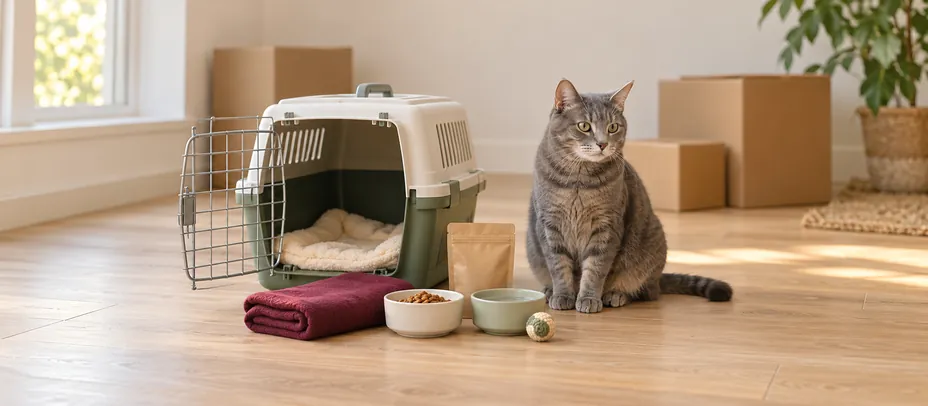
Keep the carrier and necessary supplies out of the shipment. Use the carrier according to its instructions and the cat's established travel plan. If the cat has individual health or travel concerns, ask the veterinarian before the move; do not improvise medication or sedation as a packing shortcut.
| Transition | Handler's task | What remains accessible |
|---|---|---|
| Before helpers arrive | Confirm the cat's waiting area | Carrier and contact details |
| Before departure | Check the travel kit and headcount | Food, water supplies and prescribed items |
| Overnight lodging | Confirm the property accepts the cat | Litter supplies and cleanup materials |
| New-home arrival | Prepare the initial area before entry | Familiar supplies and carrier |
| Later unpacking | Coordinate doors and access | Cat's essentials stay in place |
Pack the cat kit by use
Count the actual food supply for travel and the planned delivery gap, then add a household-selected margin. For example, four planned days plus two reserve days means six days of the cat's normal supplies. This is a logistics quantity, not a feeding recommendation. Keep litter and cleanup needs in a separate accessible container so a late arrival does not require searching mixed cartons.
For interstate travel, use APHIS's destination links and contact the receiving authority or veterinarian about requirements. The destination state or territory determines owner-pet entry rules; there is no universal certificate rule for every cat and trip. Record the source and the date checked in the private pet folder.
Prepare one arrival area first
Before bringing the cat into the home, have the handler check the intended initial area for open access points, loose packing materials and ongoing work. Arrange the cat's supplies there and tell other household members how to coordinate entry. The room should not simultaneously be the busiest carton staging area.
Keep the cat's carrier location and handler contact in the household plan. If a caregiver or family member takes over, make the handoff explicit rather than sending a general message that the cat is “somewhere inside.” Update everyone if the intended area changes during furniture placement.
After delivery, continue opening cartons in a way that preserves controlled access. Consult the veterinarian for behavior or health concerns rather than applying a fixed adjustment timetable. The moving plan is complete when the cat, handler and essential supplies have a known place, even while the rest of the household remains partly packed.
Reviewed October 22, 2026. Workflows, quantities and USD examples are editorial planning scenarios, not market averages or a carrier quote. Confirm the terms for your move.
- USDA APHIS — State-to-state pet travel — Destination state or territory sets pet-entry requirements; check the actual destination and veterinarian. (Checked 2026-10-22.)
Use this plan with
-
Prepare Interstate Pet Travel Paperwork
Prepare pet travel paperwork from destination rules, the actual travel method and veterinary timing rather…
Guide
-
Plan Moving Day with a Dog
Plan a dog’s moving day with a named handler, confirmed travel and lodging arrangements, accessible supplies…
Guide
-
Assign Moving-Day Roles and Handoffs
Assign moving-day roles so access, inventory, household care and payment decisions have clear owners and…
Guide
Related tools & guides
-
Guide
Give Teenagers Clear Roles in a Family Move
Give teenagers useful moving responsibilities while protecting school obligations,…
-
Guide
Plan Moving Day with a Dog
Plan a dog’s moving day with a named handler, confirmed travel and lodging arrangements,…
-
Guide
Prepare Interstate Pet Travel Paperwork
Prepare pet travel paperwork from destination rules, the actual travel method and…
-
Guide
Organize a Downsizing Move with an Older Adult
Organize a downsizing move with an older adult by protecting choice, measuring the…