
Plan a move with young children by separating supervision from loading, preserving a few routines and giving every essential bag an owner.
Make supervision an explicit job
Assign one adult to children during the active loading and unloading periods. That person should not also be expected to carry furniture or resolve every mover question. If there is only one adult available, consider a trusted caregiver or a different schedule that separates those responsibilities. Put the arrangement on the moving plan before helpers arrive.
Choose a place for the children that is separate from the loading route, tools and open vehicle access. A room can only serve that purpose if supervision and access are controlled; a sign on a door is not a childcare arrangement. Tell the crew which areas are occupied and who to contact if the plan changes.
| Household need | Before loading | At destination |
|---|---|---|
| Supervision | Named adult and backup | Confirmed handoff to arriving adult |
| Meals | Accessible familiar supplies | Simple meal plan before kitchen unpacking |
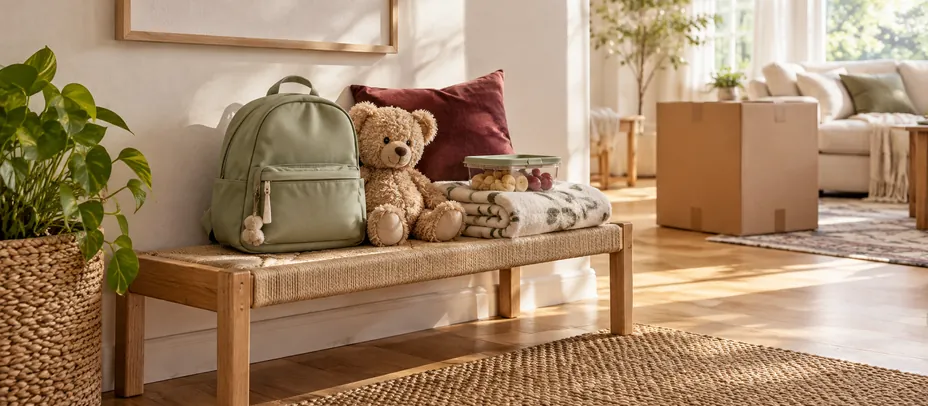
| Comfort items | Child chooses a small travel bag | Keep bag accessible through setup |
| Clothing | Changes packed outside shipment | Known place to change after travel |
| Daily information | Contact sheet and relevant records | Available to the responsible caregiver |
Explain the next few steps
Use a concrete sequence: boxes leave, the household travels, then a sleeping area is set up. Avoid promising an exact delivery time that the carrier has not confirmed. Let children make small decisions that do not control the whole schedule, such as choosing the books in a travel bag or labeling their own toy carton.
For two children and a two-day household trip, an editorial packing example might set aside one clothing change per child per day plus one spare change per child: six changes total. That is a household choice, not a universal requirement. Adjust for the children's actual needs and laundry access. Keep the bag small enough to remain with the household rather than drifting into the shipment.
Reserve capacity for arrival
Do not count the childcare adult's entire day as packing or unpacking labor. In a two-adult household, one adult may handle the receiver role while the other manages meals and supervision. If that leaves too little time for bedroom setup, schedule help or prepare a simpler first-night plan.
Pack bedding, toiletries and essential personal items by their first-use task. Label the relevant cartons clearly and identify where they will travel. Keep documents and any prescribed supplies under the responsible adult's control rather than mixed with toys.
After arrival, inspect the intended child area before opening it for play. Keep tools and packing debris out of that area and follow applicable product instructions for furniture and equipment setup. Rebuild one familiar routine at a time while the rest of the house is still being unpacked. A functional evening matters more than emptying every carton immediately.
Reviewed October 22, 2026. Workflows, quantities and USD examples are editorial planning scenarios, not market averages or a carrier quote. Confirm the terms for your move.
- NHTSA — Child Safety In and Around Vehicles — NHTSA advises supervising children around vehicles and keeping them away from vehicle play and backing areas. The named caregiver and moving-zone workflow are editorial applications of that guidance. (Checked 2026-10-22.)
Use this plan with
-
Assign Moving-Day Roles and Handoffs
Assign moving-day roles so access, inventory, household care and payment decisions have clear owners and…
Guide
-
Build a First-Night Kit for the Whole Household
Build a household first-night kit around sleep, food, hygiene, documents and device power so essential setup…
Guide
-
Pack for Moving with a Baby
Keep baby-care essentials accessible through a move with a separate travel kit, planned caregiver handoffs and…
Guide
Related tools & guides
-
Guide
Moving Day Timeline and Handoff Windows
Build a moving-day timeline from real booking windows and dependencies, with buffer time…
-
Guide
First-Week Unpacking Timeline
Restore household functions over the first week with an unpacking timeline that keeps…
-
Guide
Coordinate School Records During a Move
Coordinate a school move with a records request, destination requirements, enrollment…
-
Guide
Pack for Moving with a Baby
Keep baby-care essentials accessible through a move with a separate travel kit, planned…